Enquire Online Now
If you’re wondering how to choose an HGV training school in the UK, you’re already asking the right question. Picking the wrong school doesn’t just waste money. It costs you test slots, time off work, and sometimes the motivation to carry on at all. Many people open a search engine and sort by price. That’s the wrong starting point.
The right framework is simpler than you think: check accreditation first, then vehicles and facilities, then instructor quality, and then get clear on what the price actually includes. Work through this FREE guide, and you’ll know exactly what to ask before you hand over a deposit.
1. Check accreditation before anything else
The first filter isn’t price or location. It’s whether the school is operating with proper credentials. Three national registers cover HGV and LGV training in the UK: the National Vocational Driving Instructors Register, the National Register of LGV Instructors, and the Register of Logistics Instructors. All three are searchable on GOV.UK, and all three replaced the old DVSA voluntary register. If a school’s instructors don’t appear on at least one of them, that’s a problem worth noting before you go any further. Here at 2 Start, we’re registered under the RLI, and on the National Register.
What “DVSA-approved” actually tells you
This phrase gets used loosely. The practical thing to understand is that DVSA conducts your tests regardless of which school trained you. What matters is whether the school’s instructors hold verified register status and whether the course structure is built around DVSA test requirements. “DVSA-approved” as a marketing phrase tells you very little. At 2 Start, we are registered with the DVSA, where examiners come to our Portsmouth & Southampton depots; our Worthing site is a test centre itself.
2. Vehicles and facilities tell you how seriously a school takes training
A provider’s fleet is a direct reflection of their investment in outcomes. If a school is running outdated or poorly maintained trucks, that affects your driving experience, your comfort on test day, and your safety during training. It’s not a minor consideration.
What a quality training fleet looks like
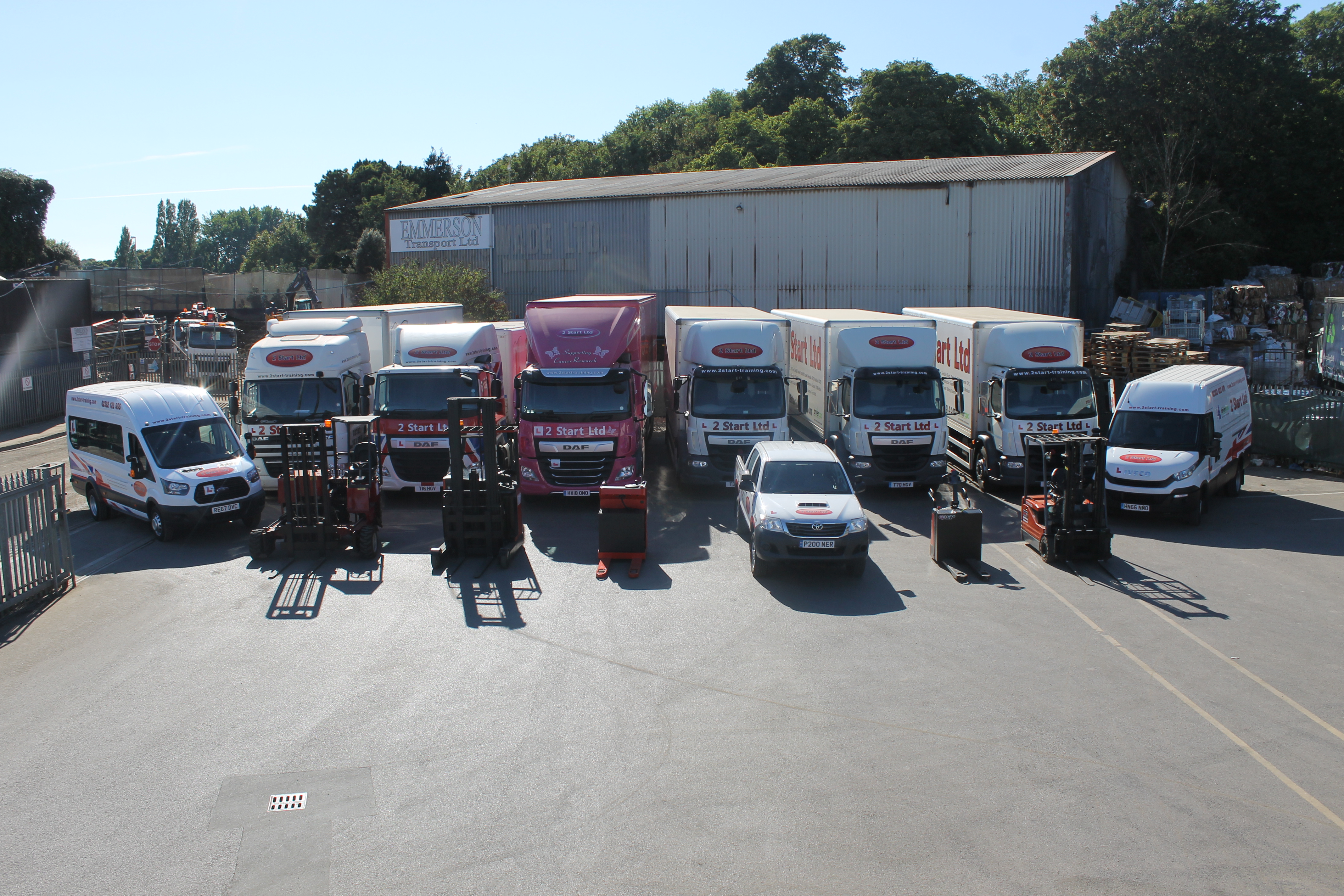
Look for modern vehicles that match the test categories you’re training for: C1, C, and C+E. Air conditioning and automatic transmission options matter more than they sound. They’re not luxuries; they reduce the mental strain during intensive learning, which means you retain more and arrive at your test calmer. Quality providers invest in modern, well-maintained, air-conditioned vehicles because the training environment has a direct effect on preparation quality and test-day readiness. Your can see 2 Start’s fleet here.
Why depot location and access matter more than you expect
Proximity to a depot affects how realistic your training schedule actually is, especially if you’re balancing work or family commitments. A school with multiple depots gives you scheduling flexibility that a single-site operator simply cannot match. Equally important is whether the school has dedicated off-road reversing areas and manoeuvring space. Test preparation that doesn’t mirror actual DVSA assessment conditions leaves you underprepared when it counts.
3. Instructor quality determines whether you pass or retake
The instructor is the product. Accreditation gives you a floor, but the instructor’s actual qualification level and teaching approach determine the ceiling you can reach. If you’re thinking about instructor roles yourself, From Operator to Educator: The Path to Becoming an HGV or Forklift Instructor explains the common progression and the credentials employers look for.
What instructor credentials to verify
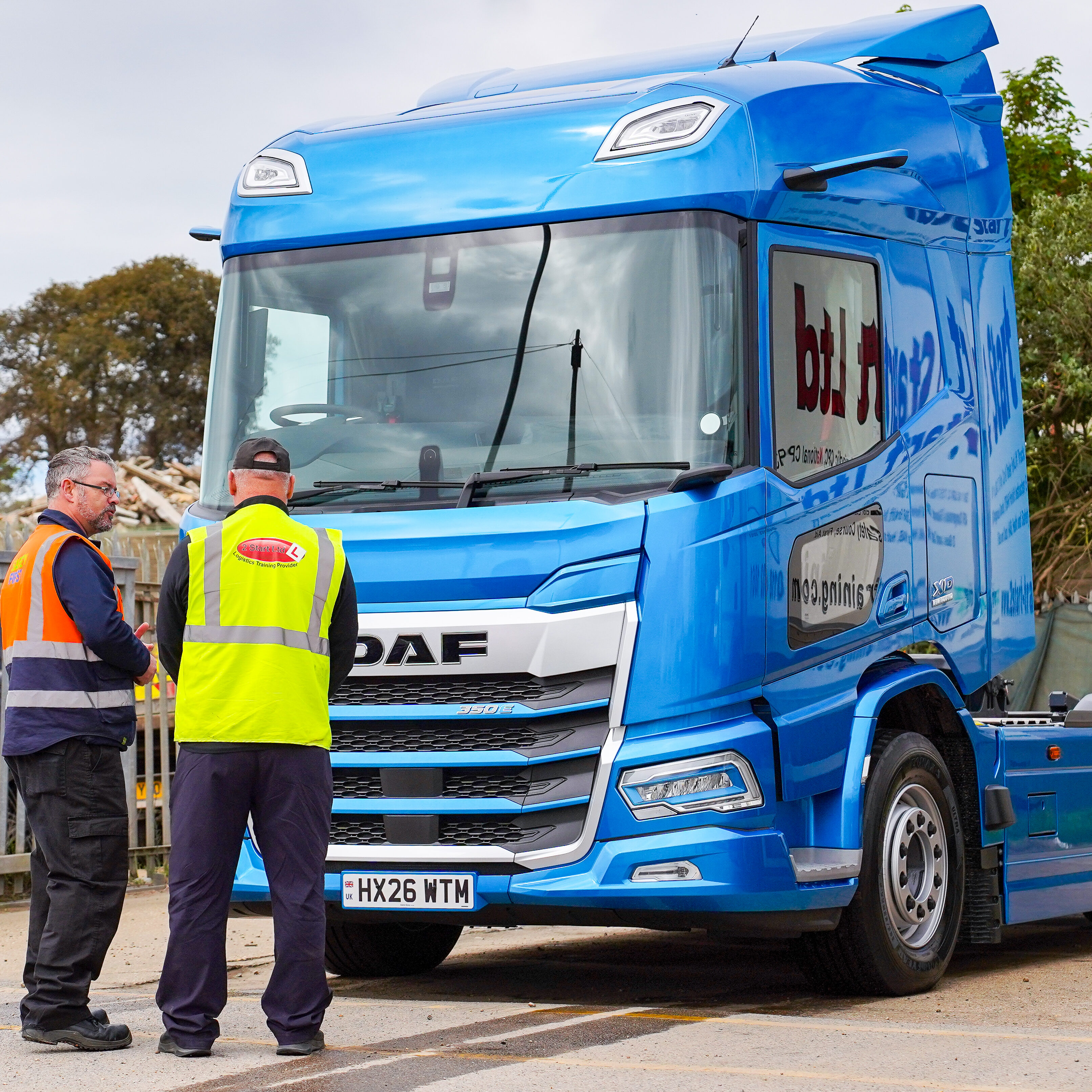
National Register of LGV Instructor status is the clearest credential to look for. Advanced certification levels within the register, such as Senior and Master Instructor grades, require documented instruction hours and formal assessment of teaching ability. That’s different from simply having years of driving experience. Ask the school directly whether their instructors are named on an official register. Not “qualified,” but specifically named on the register. A legitimate school will be able to confirm this without stalling.
How much individual driving time you should expect
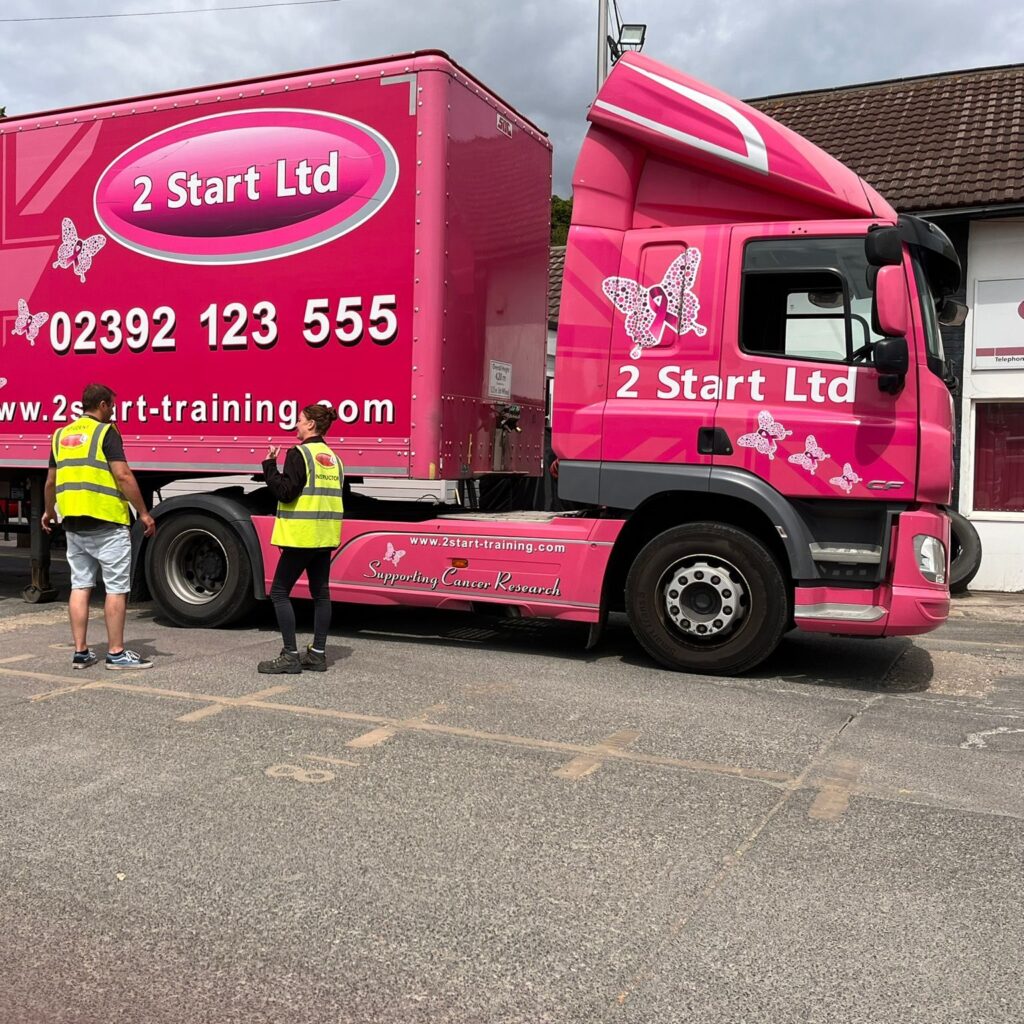
In practical HGV training, time behind the wheel is where learning actually happens. The risk with larger groups is that driving time gets shared, and you end up spending half the session watching rather than practising. For a five to six day intensive course, ask the school directly: how many hours of one-to-one driving will I personally get per training day? If the answer is vague, that tells you something.

4. Costs, course formats, and what’s actually included when choosing an HGV training school in the UK
Price varies significantly across providers, and the gap between a lower and higher quote is usually explained by what’s included or quietly excluded. A school with a lower headline price and multiple add-ons often costs more in total once you account for test fees, medical support, and theory preparation.
Typical cost ranges for Category C and C+E in 2026
Category C courses typically run from around £1,350 to £3,500 depending on training hours and inclusions. Category C+E courses range from approximately £2,500 up to £5,300 for full-package routes that include all elements. Before comparing any two quotes side by side, confirm whether each price includes DVSA test fees, theory support, D4 medical assistance, any CPC elements required, retests etc. A lower number without those inclusions is not a better deal.
On funding, the main public routes in England in 2026 are apprenticeship-route funding for employers and Jobcentre Plus referral for jobseekers, depending on eligibility and local provision. The availability of bootcamp funding can change throughout the year, so check directly with your training provider or local Jobcentre Plus work coach for the current status rather than relying on outdated information.
5. How to shortlist and book the right HGV training school with confidence
You now have the criteria. The next step is turning them into a decision. Use the checklist below against every school you’re seriously considering, rather than letting your research list grow indefinitely.
A practical checklist before you commit
Work through these five checks for every school you’re considering. First, confirm that instructors are named on an official national register. Second, visit or call to ask about the fleet and which depots are available to you. Third, get a written breakdown of exactly what is included in the price. Fourth, read independent reviews for that specific branch, not the company generally. A legitimate school welcomes every one of these questions.
Red flags that should make you look elsewhere
Watch for these warning signs:
- Pass rate claims with no date, sample size, or category breakdown
- No instructors listed on any national register
- Pressure to book immediately before you’ve had time to compare
- Add-on fees revealed only after an initial quote is given
- No independent reviews outside the provider’s own website
For candidates training across the south of England, 2 Start Training combines accredited instruction, a modern maintained fleet, multiple depot locations, and a transparent approach to pass rate data. Run their course breakdown against your checklist and use it as a benchmark for the standard you should expect from any provider you’re seriously considering.
The bottom line: how to choose an HGV training school in the UK
Choosing an HGV training school in the UK isn’t complicated once you know what to ask. Most of the information you need is either publicly available on GOV.UK through the instructor registers and DVSA benchmarks, or one direct phone call away. The schools worth your money give you clear, confident answers on accreditation, pass rates, vehicles, and pricing without hesitation or deflection.
If you’re based in the south of England and want a provider who ticks every box in this guide, 2 Start Training is worth your first call. Talk to the team, ask the questions, and compare what you hear against the framework above. You’ll know quickly whether they’re the right fit.