2 Start Ltd - Logistics Training Specialists

Call the team on 0800 731 2093

News

Todays Date:
01 February 2012
New Vehicle has arrived

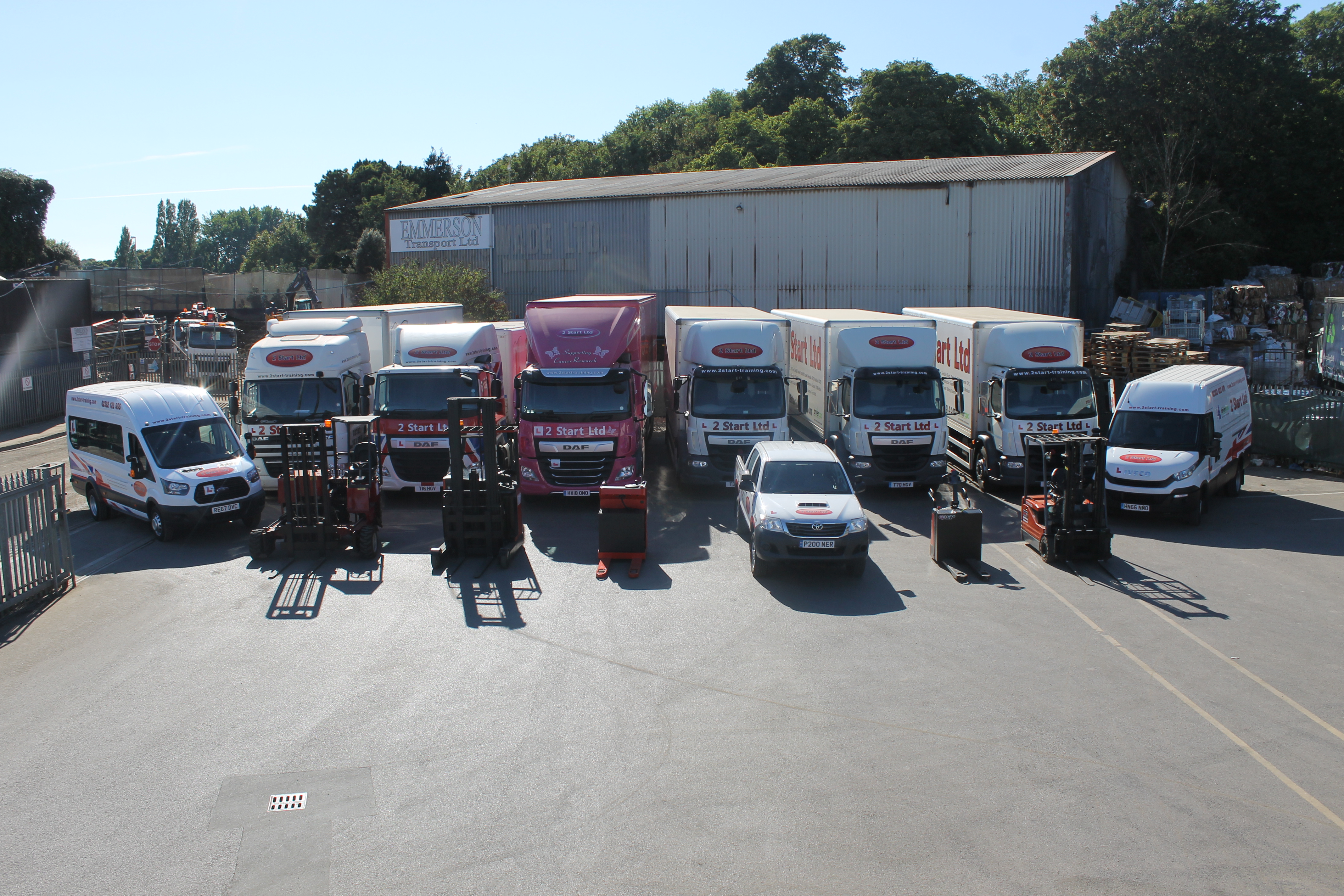
T6 HGV had been added to our growing fleet of vhicles.

Check out the full pictures of our Facebook page by clicking on the link at the bottom of this page.


23 January 2012
Change to reversing area

The Driving Standards Agency (DSA) recently announced changes to the size of the manoeuvring area used to conduct the HGV reversing exercise.

From March 2012 the reversing exercise manoeuvring area will be reduced from 92 by 18 metres to 66 by 11 metres. The new size has been trialled and tested by DSA staff at Cardington in Bedfordshire.

The principles of the reversing exercise itself will remain the same and will not change.

Part of the reason the DSA has decided to reduce the manoeuvring area is to accommodate customer premises. Many DSA LGV test centres are located on VOSA (Vehicle Operator Services Agency) premises. The DSA has had (for many years) an arrangement to rent land from The VOSA testing sites.

As part of an ongoing modernisation program VOSA commercial vehicle testing sites have and are to become ATF’s (Approved Testing Facilities.) As ATF’s come online the local VOSA testing stations will close as will the local DSA LGV manoeuvring areas.

Therefore the DSA is actively encouraging training companies to become approved testing centres. The LGV practical test will still be carried out by an independent person, i.e. a suitably qualified DSA driving examiner. The main problem training companies are encountering when seeking suitable testing premises is size and cost.

To lease or even purchase suitable land and premises covering at least 92 by 18 meters can be difficult to find and extremely expensive. It is perceived that by making the required area 66 by 11 meters this will make more areas suitable and ultimately be cheaper (than 92 by 18) to lease or purchase.

05 December 2011
New National + International CPC Up Date

OCR has recently released details of the structure and content of the CPC qualifications for 2012 and beyond.  The first of the new combined National and International syllabus examinations will be on Friday 2 March, followed by examinations on the usual three monthly cycle on 1 June, 14 September and 7 December.


The examination structure will be:


•           one multi-choice examination with 60 questions to be answered in two hours.  A pass mark of 70% will be required to pass this unit. 


•           one case study examination, again of two hours duration and with between five and eight questions totalling 60 marks.  Candidates will have to gain at least 50% of the available marks to pass this unit.


There will be some significant alterations to the way in which the examinations are conducted, particularly with regard to the case study. The principal changes are:


 •          candidates will be able to take with them into the examination room any written reference material they wish (this facility will not be available for the multiple choice examination)


•           there will be no pre-release of the case study scenario as previously.  Candidates will see the scenario for the first time in the examination room


•           the previous requirement to gain a higher percentage of marks on questions relating to key syllabus topics has been abandoned.  Candidates will need to gain at least 50% of the 60 marks available to pass this unit


•           on every case study examination paper there will be questions relating to Drivers’ Hours, Operator Licensing and Vehicle Costing.  The remainder of the questions will be taken from other areas of the syllabus such as Budgeting, Dangerous Goods, Driver Licensing and Maintenance

2 Start Affiliates